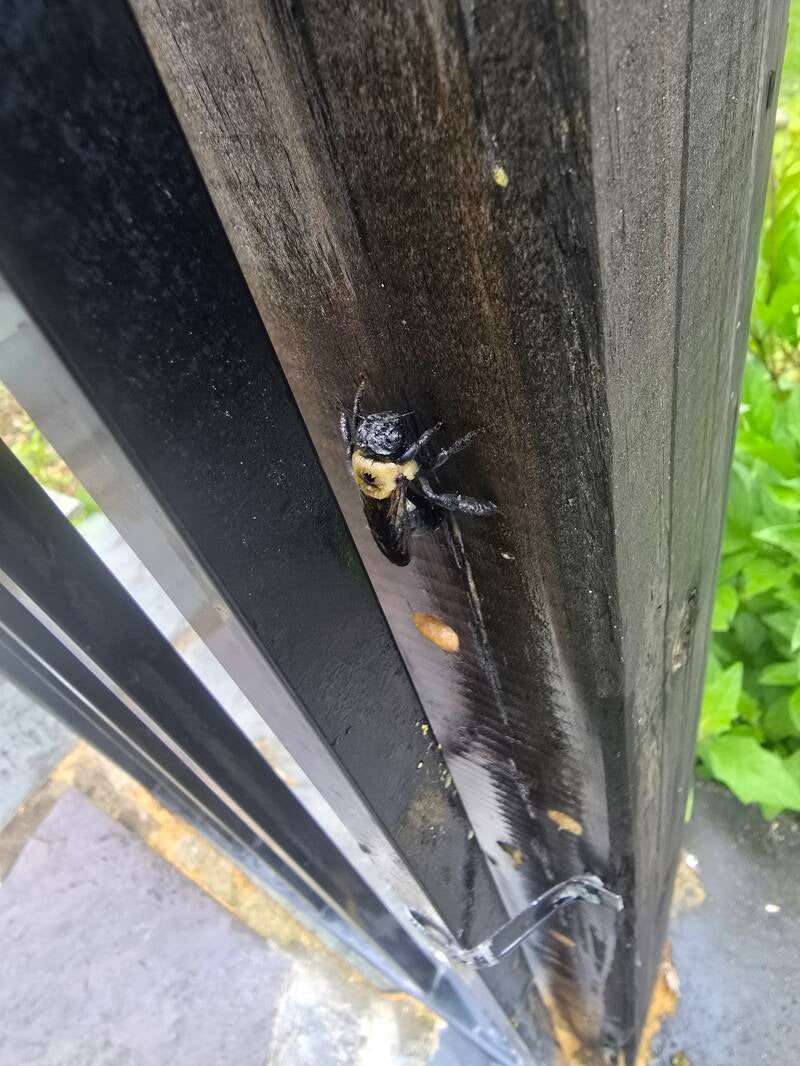
Round Entrance Holes
Smooth, round holes approximately the size of a fingertip found in exposed or unfinished wood.
Carpenter bees drill into exposed wood around decks, porches, fascia boards, railings, trim and other wooden surfaces. Howey Pest Solutions provides professional carpenter bee treatments for homes and businesses throughout Northern New Jersey.
Carpenter bees do not eat wood. Female bees drill smooth, round entrance holes and create tunnels inside the wood where they lay their eggs. These tunnels may be reused and expanded year after year.
Over time, repeated carpenter bee activity can damage trim, railings, fascia boards, decks, porches, sheds and other exposed wooden surfaces. Woodpeckers may also cause additional damage while attempting to reach the larvae inside the galleries.
Carpenter bees are often seen hovering near rooflines, decks, railings and wooden trim during spring. Males may act aggressive, but they do not have stingers. Females can sting but are generally not aggressive unless handled or threatened.
Carpenter bee damage is often easy to recognize once you know what to look for.
Smooth, round holes approximately the size of a fingertip found in exposed or unfinished wood.
Small piles of wood shavings or sawdust may collect beneath an active carpenter bee gallery.
Large bees repeatedly flying around decks, fascia, railings, porches, pergolas or wooden trim.
Brown or yellow staining may appear beneath active holes from carpenter bee waste and repeated activity.
Carpenter bees often return to previously used galleries and may expand the tunnels over time.
Woodpeckers may tear open wood around carpenter bee galleries while searching for larvae.
Effective carpenter bee control requires treating the individual galleries and the wooden surfaces where bees are active. Simply spraying bees while they are flying may not reach the insects or larvae inside the wood.
We inspect the property for active holes, staining, sawdust, old galleries and areas likely to attract carpenter bees.
We determine which holes show current activity and which may be older, previously used tunnels.
A professional dust treatment is applied inside accessible carpenter bee holes to reach activity within the wood.
After activity has stopped, holes should be properly sealed and the wood painted, stained or otherwise protected.
Carpenter bees prefer exposed, weathered or unfinished wood, especially in sunny and protected areas.
If covered carpenter bee activity returns in the treated areas during the guarantee period, contact our office to schedule a follow-up inspection and treatment. New activity in untreated wood or newly created holes may require additional service.
Protecting exposed wood and properly repairing old galleries can make the property less attractive to carpenter bees.
Our Home Defense Plans provide preventative pest protection and service calls between scheduled visits for covered pests. Carpenter bee coverage depends on the selected plan and the areas included in the service.
Compare Home Defense PlansHowey Pest Solutions provides carpenter bee inspections and treatments throughout Sussex County, Morris County, Warren County and parts of Passaic County.
No. Carpenter bees remove wood to create tunnels and nesting galleries. They do not consume the wood.
Yes. A single gallery may cause limited damage, but repeated use and expansion over several years can weaken boards and create extensive cosmetic damage. Woodpeckers may also tear open the wood while searching for larvae.
Male carpenter bees may hover and act territorial, but they do not have stingers. Females can sting but usually do so only when handled or directly threatened.
Carpenter bees may return to favorable wooden surfaces and reuse existing galleries. Untreated holes and exposed wood can attract activity year after year.
Active galleries should generally be treated before they are sealed. Closing an untreated hole may trap bees inside or cause them to create another exit.
Activity usually decreases as bees enter treated galleries. Some bees may remain visible temporarily, especially when multiple galleries are present.
Qualifying carpenter bee treatments include a 90-day guarantee for covered activity in the treated areas. New holes in untreated areas may require additional service.
Carpenter bee coverage is included in qualifying Home Defense Plans. Coverage and included structures depend on the selected plan.
Schedule a professional carpenter bee inspection with Howey Pest Solutions. We will locate active galleries, explain the treatment options and help protect your wooden surfaces from additional damage.