Large Ants Indoors
Large black or reddish-black ants traveling through kitchens, bathrooms, basements or other interior areas.
Carpenter ants can nest inside walls, rooflines, decks and moisture-damaged wood. Howey Pest Solutions provides professional carpenter ant inspections and targeted treatments for homes and businesses throughout Northern New Jersey.
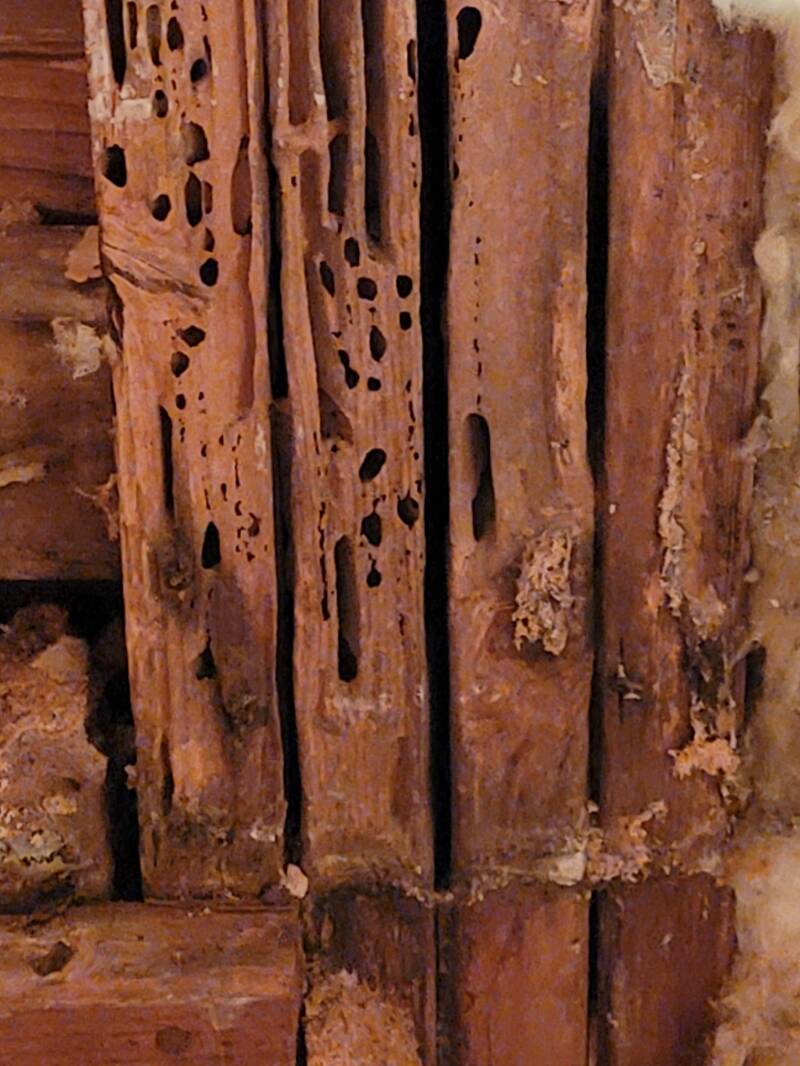
Carpenter ants do not eat wood like termites. Instead, they excavate galleries inside wood to create nesting areas. Over time, a large colony may weaken wood that has already been damaged by moisture, decay or previous structural problems.
These ants are commonly found around rooflines, window frames, decks, porches, wall voids, crawlspaces, garages and areas where moisture collects. Locating the nest is an important part of providing effective control.
Large ants inside the home—especially during the evening or early spring—may indicate a carpenter ant nest nearby. Winged ants indoors can also be a sign of an established colony.
Carpenter ants are often active at night and may remain hidden inside walls or damaged wood during the day.
Large black or reddish-black ants traveling through kitchens, bathrooms, basements or other interior areas.
Winged carpenter ant swarmers appearing inside the home, especially near windows, doors and light fixtures.
Small piles of sawdust-like material, insect pieces or wood debris below trim, wall voids, beams or window frames.
Faint rustling or crackling noises coming from walls, ceilings, door frames or other hollow wooden areas.
Carpenter ants are commonly associated with roof leaks, plumbing leaks, damp crawlspaces and moisture-damaged wood.
Ants traveling along siding, utility lines, tree branches, foundations, decks or rooflines to enter the structure.
Carpenter ant control requires more than spraying visible ants. We inspect for nesting areas, moisture conditions and exterior access points before choosing the proper treatment method.
We look for active ants, trails, damaged wood, moisture problems, satellite nests and possible entry points.
We identify areas where carpenter ants are nesting, traveling or entering the structure whenever possible.
Treatment may include liquids, professional baits, dusts or direct void applications based on the property conditions.
We explain what was treated, what to expect and any conditions that should be corrected to help prevent future activity.
Qualifying carpenter ant treatments include a one-year guarantee for the treated structure. Should covered carpenter ant activity return during the guarantee period, contact our office to schedule a follow-up inspection and treatment.
Correcting moisture problems and limiting access to the structure can reduce the conditions that attract carpenter ants.
Howey Pest Solutions provides carpenter ant inspections and treatments throughout Sussex County, Morris County, Warren County and parts of Passaic County.
No. Carpenter ants do not consume wood. They remove wood to create smooth galleries where the colony can nest.
Carpenter ants and termites damage wood differently. Termites eat wood, while carpenter ants excavate it. A large or long-term carpenter ant infestation can still contribute to structural damage, especially in wood already weakened by moisture.
Carpenter ants may be nesting inside the structure or traveling indoors from an exterior colony while searching for food and water. An inspection helps determine where the activity is originating.
Treating only visible ants may provide temporary relief but may not reach the primary or satellite nests. Effective control usually requires locating activity and applying treatment to nesting and travel areas.
Results depend on the colony size, nest location, property conditions and treatment method. Some activity may continue temporarily as ants contact treated areas or carry bait back toward the colony.
Carpenter ants are covered under qualifying Home Defense plans. Coverage may vary by plan, so our office can help determine which option is best for your property.
Qualifying carpenter ant treatments include a one-year guarantee for the treated structure. Service terms and covered areas are explained before treatment.
Schedule a professional carpenter ant inspection with Howey Pest Solutions. We will identify the activity, explain the treatment options and help protect your property from further damage.