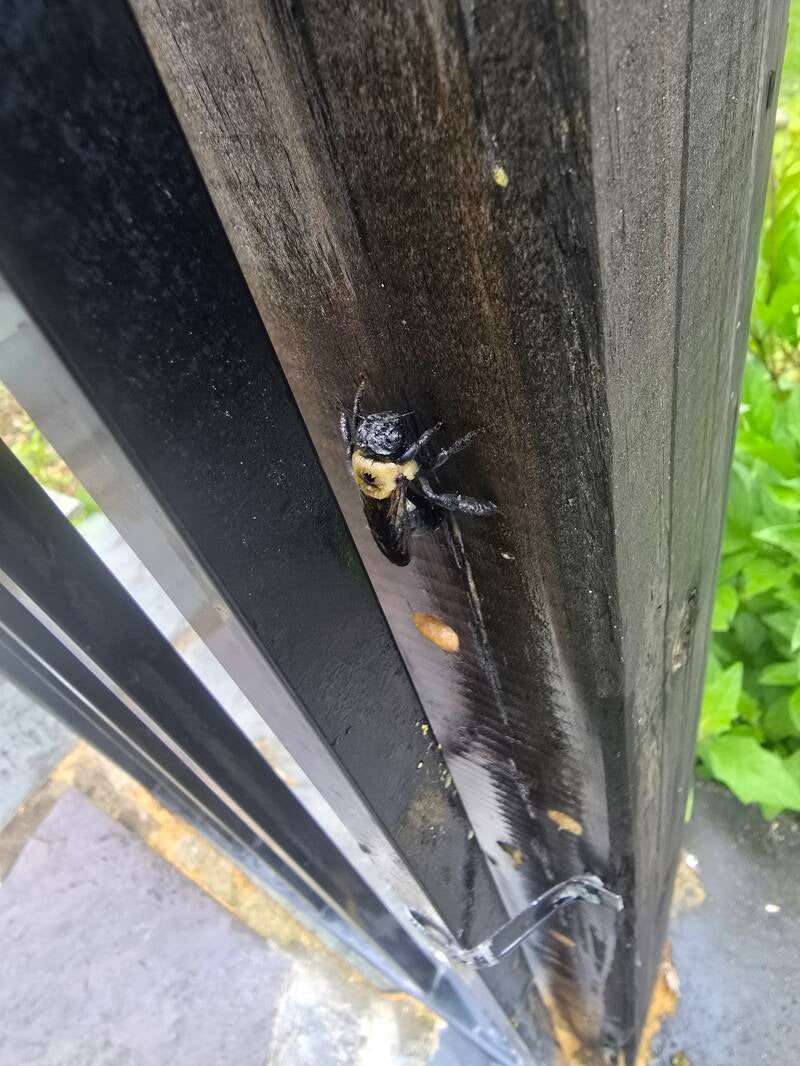
Carpenter Bee Control in Northern New Jersey
Protect your home, deck, porch, fascia boards, and wooden structures from carpenter bee damage with professional treatment from Howey Pest Solutions.
Schedule a Free Inspection
Professional Carpenter Bee Treatment
Carpenter bees are a common wood-damaging pest in Northern New Jersey. Unlike honey bees, carpenter bees do not live in large hives. Instead, they drill round holes into wood to create tunnels where they lay eggs and raise their young.
At Howey Pest Solutions, we provide targeted carpenter bee treatments designed to reduce activity, treat nesting galleries, and help protect your home from continued wood damage.
Signs You May Have Carpenter Bees
Where Carpenter Bees Commonly Nest
Carpenter bees prefer untreated, weathered, or exposed wood. They often return to the same areas year after year if the galleries are not treated.
Carpenter Bees vs. Bumble Bees
Carpenter bees are often mistaken for bumble bees. Both are large bees, but there are a few key differences.
Carpenter bees usually have a shiny, mostly hairless black abdomen and are often seen hovering near wood surfaces.
Bumble bees are usually fuzzy, have more hair on the abdomen, and typically nest in the ground or protected cavities rather than drilling holes into wood.
If you are unsure what type of bee you have, Howey Pest Solutions can inspect the area and identify the issue.
Our Carpenter Bee Inspection Process
Our technician will inspect the home and property to locate active carpenter bee holes, staining, wood damage, and areas where bees may return.
Our Carpenter Bee Treatment Process
Carpenter bee treatments are focused on active galleries and areas where bees are likely to drill. Treatment may include:
Carpenter Bee Defense Service & Guarantee
Our Carpenter Bee Defense
This service includes targeted treatment for carpenter bee activity and comes with a 90-day guarantee.
If carpenter bee activity returns during the guarantee period, contact us and we will return to inspect and retreat covered areas at no additional charge.
Why Carpenter Bees Come Back
Carpenter bees are known to return to the same wood areas year after year. Untreated holes can also attract more bees and may lead to additional damage over time.
How to Help Prevent Carpenter Bees
Woodpecker Damage After Carpenter Bees
If carpenter bees have been active, woodpeckers may continue pecking at the wood even after the bees are treated. This happens because woodpeckers are searching for larvae inside old carpenter bee galleries.
Treating carpenter bees helps address the source of the problem, but damaged wood may still need to be repaired, sealed, painted, or protected to reduce future woodpecker activity.
Carpenter Bee FAQs
Do carpenter bees sting?
Male carpenter bees may hover aggressively but cannot sting. Female carpenter bees can sting, but they are usually not aggressive unless handled or disturbed.
Do carpenter bees damage wood?
Yes. Carpenter bees drill into wood to create tunnels. Over time, repeated activity can weaken wood and cause visible damage.
Will carpenter bees go away on their own?
Carpenter bees often return to the same areas each year if the galleries are not treated and sealed after activity stops.
When is the best time to treat carpenter bees?
Spring and early summer are the best times to treat active carpenter bee activity, but treatment can be performed whenever activity is present.
Should I plug the holes right away?
No. Carpenter bee holes should usually be treated first. After activity has stopped, the holes can be sealed to help prevent future use.
Do you offer free carpenter bee inspections?
Yes. We offer free inspections and quotes for residential and commercial customers.
Areas We Serve
Howey Pest Solutions provides carpenter bee control throughout Sussex, Morris, Warren, and parts of Passaic County, including Sparta, Hamburg, Vernon, Newton, Andover, Randolph, Rockaway, Denville, Morristown, Hackettstown, Blairstown, West Milford, Wayne, Pompton Lakes, and surrounding towns.
Schedule Your Free Carpenter Bee Inspection
If you are seeing large bees hovering around wood, round holes in your trim or deck, or sawdust below wood surfaces, Howey Pest Solutions can help.
Book a Free Inspection